The box is the first thing the customer touches
For anyone selling online, the shipping box has quietly become part of the product. It is the first physical contact a customer has with a brand, it appears in unboxing videos and reviews, and it has to survive a courier network on the way. A printed corrugated mailer does all of that, and in the last few years digital printing has made it possible to order a few hundred rather than a few thousand.
This guide explains how corrugated mailers are made, the difference between the print methods on offer, how to choose the board, and what to put in the artwork. It is written for a small brand ordering its first printed shipping box, or for one that has been using plain boxes and a sticker and wants to move up.
Corrugated versus folding carton
These are two different products and are often confused. A folding carton is a single layer of thick paperboard, folded and glued; it is the retail box a phone or a perfume comes in, and it sits inside a shipping box. Corrugated board is a sandwich: a fluted (wavy) paper glued between two flat liners. The flute gives it stiffness and cushioning, which is why it is the material for anything that travels through the post on its own. We cover the retail carton separately in our guide to printed disc packaging; this article is about the box that goes in the courier van.
Board: flute and liner
The flute is named by height. For mailers the choices are:
- E flute (about 1.5 mm thick). The standard for printed mailers. Smooth enough for good print, stiff enough for products up to a few kilograms, folds cleanly on small boxes.
- B flute (about 3 mm). More cushioning, used for heavier or fragile goods. Print surface is slightly more washboard-like, which shows on large solid colours.
- EB or BC double wall. For heavy or high-value items. Rarely printed beyond one colour because the board is thick and the box is usually inside another one anyway.
The liner is the flat paper on the outside. Kraft (brown) is the default and prints well with dark inks; a white liner (either bleached kraft or white-coated) is what you need for full-colour artwork or for any light colour. A white liner on the inside as well lets you print the inside of the lid, which is where many brands put a welcome message.
Box style
Nearly every e-commerce mailer is one of two styles from the international FEFCO code:
- 0427 (roll end tuck front, "mailer box"). Self-locking, no tape, opens like a book, lid tucks in at the front. The one you see in unboxing videos. Available from about 100 x 80 x 40 mm up to around 450 x 350 x 150 mm before it needs a thicker flute.
- 0201 (regular slotted carton). The classic taped shipping box. Cheaper, stronger for the size, less premium in feel. Usually printed one or two colours on kraft.
Internal dimensions are quoted as length x width x height, and they are internal: the product must fit inside them with a few millimetres to spare. Measure the product, add the thickness of any insert or void fill, and round up. A box 5 mm too small is scrap; 5 mm too big is fine.
Print methods and where they fit
Flexographic
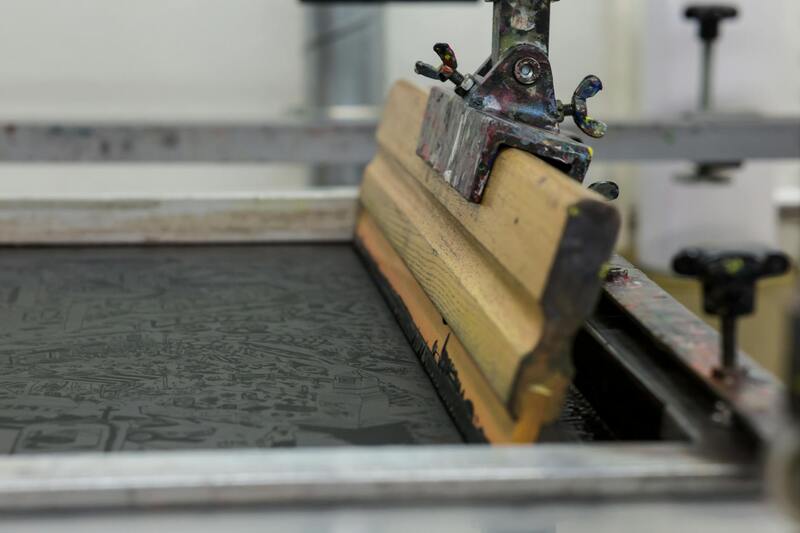
Rubber plates print directly onto the board, one plate per colour. Excellent for one to three spot colours on kraft, very low unit cost at 1,000 pieces and above. Fine detail and gradients are poor; solid areas can show flute lines. Plates cost money, so a short run does not make sense.
Digital (single pass inkjet)
The box blank is printed flat by a large inkjet before it is cut and creased. Full colour, no plates, sharp text down to about 6 pt, runs from 50 pieces. Unit cost is higher than flexo but flat across quantities, so it is the method for a first order or for several designs in small numbers. Colour accuracy is good on white liner and acceptable on kraft (colours go warmer and darker).
Litho laminated
A sheet is offset printed on ordinary coated paper, then glued to the corrugated board before die cutting. Best possible print quality, glossy or matte, foil and spot UV possible. Minimums around 500 to 1,000, longer lead times. Used for premium subscription boxes and gift sets.
Artwork on a dieline
The print shop will send a dieline for the exact box size and style: a flat drawing showing cut lines, crease lines and glue areas. Build the artwork on that file and keep it on its own layer.
- Note which panels are outside and which are inside; on a mailer, the inside of the lid is the panel customers see first when they open it.
- Keep text and logos at least 10 mm from creases and cuts. Corrugated cutting tolerance is larger than on paper, typically 2 to 3 mm.
- Do not run a solid dark colour across a crease if you can avoid it; the crease cracks the ink and shows a light line on kraft or a white line on coated liner.
- Expect kraft to shift every colour. Send a Pantone reference for brand colours and ask for a printed sample if the colour matters.
- Barcodes, recycling marks and "fragile" symbols belong on the bottom or a side panel, in black, at least 25 mm wide. Our piece on retail-ready packing covers the compliance marks retailers ask for.
How small a run is realistic
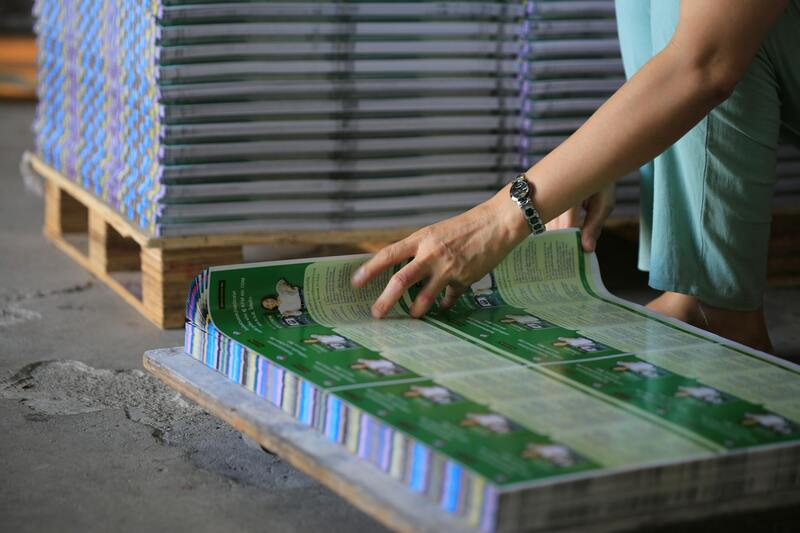
Digitally printed E-flute mailers start at about 50 to 100 pieces from most suppliers. Below that, the sensible option is a plain box with a printed label or a printed tissue wrap, which gives most of the brand effect for a fraction of the cost. Between 100 and 1,000 pieces digital is the right choice. Above 1,000 pieces of one design, flexo on kraft or litho lamination on white becomes cheaper per box, and it is worth re-quoting.
Boxes ship flat. A pallet of 1,000 E-flute mailers takes real storage space, so order what six months of dispatches needs rather than the quantity that looked cheapest per unit.
Printed mailer boxes from us
We supply digitally printed corrugated mailers from 100 pieces in E and B flute, kraft or white liner, with inside-lid printing as an option, and move larger runs to flexo or litho lamination when the quantity justifies it. Send us the product dimensions and we will return a dieline for the right FEFCO style; a single printed sample box is available before a run so you can check the fit and the colour on the actual board.
For brands that ship several product sizes, we can standardise on two or three box sizes and keep the dielines on file for reorders. See the range of packaging and specialty printing on our business printing page, or contact us with the product size and monthly volume for a quote.