What a shrink sleeve label is
Look along a supermarket shelf and you will see plenty of bottles and cans where the print covers the whole container, top to bottom and all the way round, following every curve. Most of those are shrink sleeve labels. A printed plastic film is formed into a tube, slipped over the container and shrunk with heat until it wraps the shape tightly.
Shrink sleeves give a brand far more printable area than a flat label and can cover shapes no paper label could follow. They also bring their own set of decisions: film type, artwork that has to be deliberately distorted, application equipment and recycling questions. This guide walks through each of them so you can judge whether a sleeve suits your product and order one with fewer surprises.
Shrink sleeves compared with ordinary labels
| Pressure-sensitive label | Shrink sleeve | |
|---|---|---|
| Coverage | A panel on the front, back or wrap-around band | Up to the full container, including curves, shoulders and neck |
| Container shapes | Flat or gently curved surfaces | Strongly contoured bottles, jars and cans |
| Application | Labeller or by hand | Sleeve applicator and heat tunnel, or careful manual heat shrinking for small runs |
| Artwork | Designed flat, as seen | Pre-distorted so it looks right after shrinking |
For a straight-sided jar or a bottle with one flat panel, a standard label is usually simpler and cheaper. Our guide to bottle and jar labels for curved surfaces covers that route. A sleeve earns its place when the container shape is part of the design, when you want 360-degree branding, or when you need a tamper-evident band over the cap.
Film choices
Shrink sleeves are printed on heat-shrinkable plastic films. The main families are:
- PETG. Shrinks a lot, so it suits containers with large differences in diameter, such as a bottle with a narrow neck. Clear and glossy.
- PVC. Long used for sleeves, predictable to shrink and cost-effective, though many brands now avoid it for environmental reasons.
- OPS (oriented polystyrene). Lower density and good shrink properties.
- Polyolefin-based films. Often chosen where recyclability of the container is a priority, because some can float off in recycling wash tanks.
Which film is right depends on the container shape, how much it needs to shrink, the shelf environment (chilled, hot-fill, outdoor) and your recycling goals. A sleeve converter will recommend a film after seeing the container.
Printing on the inside of the film
Shrink sleeves are usually reverse printed, which means the ink goes on the inside of the clear film. The film then protects the print from scuffs and moisture on the outside. Because of this, the colours are printed in reverse order, and a white backing layer is often added behind the colours so they stay opaque when the container behind them is dark or clear.
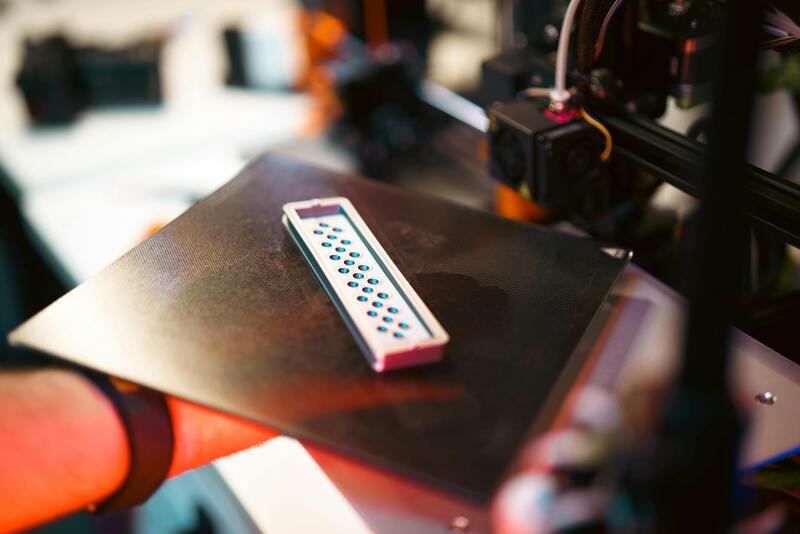
Longer runs are typically printed by gravure or flexography. For short runs, digital presses that print on shrink film have made smaller quantities practical, which suits new product launches, seasonal editions and craft producers testing a design.
Distortion artwork: designing something to look right after shrinking
This is the part that surprises most people. A sleeve shrinks more where the container is narrow and less where it is wide. Text and logos printed flat would come out stretched on the shoulders and squashed at the neck. To prevent this, the artwork is pre-distorted.
How it is done
- The converter prints a grid pattern on the chosen film and shrinks it onto your actual container.
- The distorted grid is measured, showing how much each area shrinks.
- Your flat artwork is warped in the opposite direction, so that after shrinking it looks correct.
Practical tips for the designer:
- Keep key text, barcodes and logos in the zones with the least shrinkage, usually the main body of the container.
- Avoid fine text and thin lines in high-shrink areas such as the neck.
- Send a sample of the actual container to the printer early. Two bottles with the same volume can have quite different shapes.
- Place barcodes vertically where possible, and check that they scan on the shrunk sample. Our article on tamper-evident and security labels also covers adding a seal feature to packaging.
Tamper-evident bands and multipacks
A sleeve can extend over the cap with a perforated band, so the customer has to tear it to open the container. This works as a tamper-evident seal and can be part of the same sleeve or a separate neck band. Sleeves can also bundle two or three containers into a promotional multipack.
Application: how sleeves go onto containers
On a production line, sleeves are supplied on rolls, cut and dropped over each container by an applicator, then passed through a steam or hot-air tunnel that shrinks them in seconds. Steam generally gives the most even result on complex shapes.
Small producers without a sleeve line can apply sleeves by hand and shrink them with a heat gun or a small tabletop tunnel. Results are less consistent than on a line, so it suits short runs and simpler shapes. If you are planning a manual approach, tell your printer, so they can recommend a film that shrinks at a lower temperature and a sleeve size with forgiving tolerances.
What to send when you ask for a quote
Shrink sleeve quotes depend on details that a flat label quote does not need. Having these ready speeds things up:
- Sample containers. Several physical samples, ideally filled and capped, so the sleeve can be sized and tested on the real shape.
- Container drawing. If you have a technical drawing from the bottle or can supplier, send it. It gives exact diameters and heights.
- Coverage. Full body, body only, or body plus tamper band over the cap.
- Application method. Automatic line, a contract packer, or by hand. This affects how the sleeves are supplied, on rolls or as cut sleeves.
- Product conditions. Chilled, frozen, hot-filled, or exposed to oils or alcohol.
- Quantity per design. And whether there are several flavours or variants sharing one container shape.
Allow time for the distortion step
The grid test and distortion of artwork add a stage that flat labels do not have. Build that into your launch timeline, and only sign off artwork once you have seen a shrunk sample on your own container. A sleeve that looks fine as a flat PDF proof can still show a stretched logo on the shoulder, and that is far cheaper to fix before the run than after it.
Recycling considerations
A full-body sleeve covers the whole container, which can make it harder for recycling sorting systems to identify the material underneath. Options that help include:
- A perforated tear strip so consumers can remove the sleeve before recycling.
- Films chosen to separate from the container in the recycling wash.
- Partial sleeves that cover less of the container.
If your customers or retailers have packaging requirements, share them at the quote stage.
Ordering shrink sleeves with us
We supply short-run shrink sleeves for bottles, jars and cans, alongside our standard label and packaging printing. Send us a sample container, your artwork and the expected quantity, and we will help with film choice, distortion testing and a proof on your actual container before the run. See our options under print quality and materials, or contact us to talk through your product.